
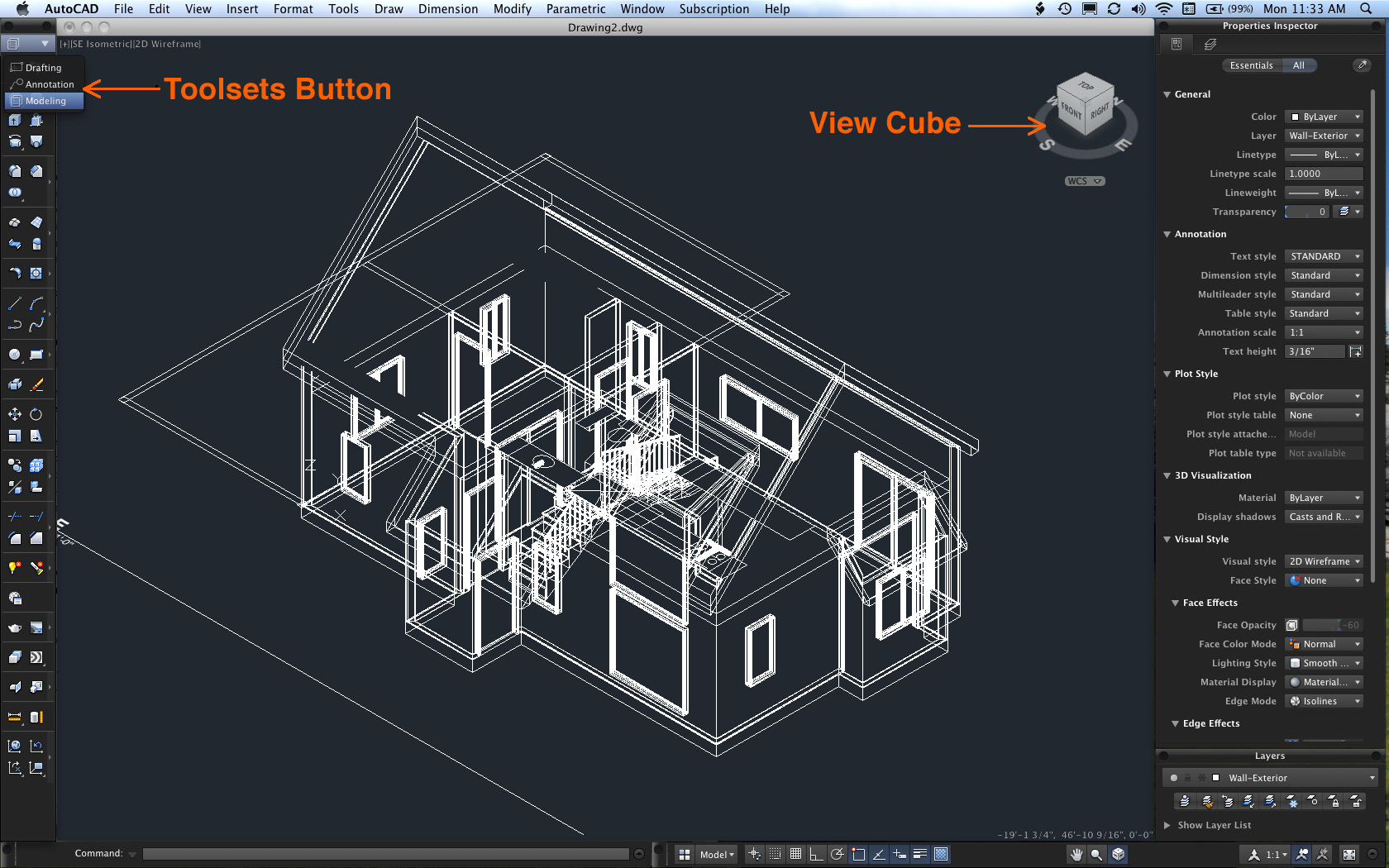
AutoCAD 2021 24.0 Crack + License Key X64 [Latest] 2022
Annotation can be an extension or even replacement for the “notepad” and drawing board. The feature allows the user to label objects, entities, and documents in your drawings.
Note: Autodesk AutoCAD 2020 has Annotation 2.0, which is a modification of Annotation 1.0. The latest version of Annotation is 4.0. This article will cover Annotation 1.0 only.
Key features of AutoCAD include:
dwg – with design-centric features like intelligent objects, lists, and attribute editing
dwg – with design-centric features like intelligent objects, lists, and attribute editing raster and vector – some features support raster and vector drawing
some features support raster and vector drawing dwg – support for office file formats (Office Open XML)
support for office file formats (Office Open XML) ai – markup language for creation of AI (Adobe Illustrator) documents
markup language for creation of AI (Adobe Illustrator) documents mt – markup language for creation of Microsoft PowerPoint slideshows
markup language for creation of Microsoft PowerPoint slideshows png – format for graphics files
format for graphics files pdf – format for Adobe Acrobat documents
format for Adobe Acrobat documents tif – format for image files
format for image files xls – format for Microsoft Excel spreadsheets
format for Microsoft Excel spreadsheets vhd – format for Windows Virtual Hard Disks
AutoCAD also has several optional features:
intelli-view – the most prominent of which is a 2D drafting view that is used in nearly every operation in AutoCAD
the most prominent of which is a 2D drafting view that is used in nearly every operation in AutoCAD 2D drafting – for 2D drafting
for 2D drafting 3D drafting – for 3D drafting
for 3D drafting 2.5D drafting – for 3D drafting on paper
for 3D drafting on paper scripting – for scripting (macro and script creation)
For a complete overview of AutoCAD features and a more detailed description of its technical specifications, see the Autodesk website.
History of AutoCAD
Development began in 1980 as a development project for QDOS, a version of the operating system MSDOS developed at Microsoft for the PC platform. The basic version of AutoCAD ran on the MS
AutoCAD 2021 24.0 With Serial Key [Mac/Win]
In June 2010, Autodesk began to support scripting languages other than Visual LISP. This allows AutoLISP to be replaced by JavaScript, ColdFusion, PHP, Python and Ruby.
In April 2011 Autodesk discontinued support of Visual LISP, however, it will continue to be supported for its ObjectARX components.
Visual LISP was a declarative programming language, used by default to develop AutoCAD applications for graphical interfaces. A graphical editor was also available, which was used to create and modify scripts. The user was required to create classes in order to develop their applications. Classes were similar to standard software programming.
In addition to Visual LISP, AutoCAD provided a graphical editor that allowed the user to develop and execute scripts.
A programming API, referred to as ObjectARX, is available for customizing AutoCAD. It is written in C++ and is released under the GNU General Public License (GPL). ObjectARX can be used to customize AutoCAD by adding third party capabilities or to automate repetitive tasks. ObjectARX is primarily used to develop AutoCAD applications. ObjectARX is integrated with AutoLISP.
Visual Basic for Applications (VBA) is supported by AutoCAD from the AutoCAD 2011 release. VBA allows developers to automate AutoCAD and its add-ons. VBA is more than a programming language, it is also a development environment. Its syntax is very similar to Microsoft’s Visual Basic, and programming can be done in a very intuitive manner. VBA and VBA Add-ins run on Microsoft Windows platforms and can communicate directly with AutoCAD.
In addition to VBA, AutoCAD supports.NET for automation..NET programming is similar to VBScript and provides the same level of native support in AutoCAD as VBA. The.NET programming language is integrated with AutoCAD from the AutoCAD 2011 release and can communicate directly with AutoCAD.
In April 2011, Autodesk discontinued support of Visual LISP and ObjectARX. It is expected that ObjectARX will continue to be supported for its scripting abilities.
ColdFusion, an object-oriented, server-side programming language was available in AutoCAD from the 2007 release. ColdFusion scripts were developed using the browser-based graphical editor, which allowed AutoCAD to communicate with the scripts in real time
af5dca3d97
AutoCAD 2021 24.0 Full Version
Create a new template with the following settings:
* Name: “ABC”
* Description: “Simple drawing”
* Category: “Drawing”
* Orientation: “No Orientation”
Create a new drawing (e.g. “ABC.dwg”)
Open the drawing (right-click on the drawing and choose “Open”).
Draw a rectangle, also known as a box (left click and drag a rectangle).
Create a new template from the drawing (right click on drawing and choose “Template > Create Template from Drawing”)
Right-click on the new template and choose “Save As”
Choose a path where you want to save the new template.
Save the template with the name “ABC”
Open the template in AutoCAD (right click on the template and choose “Open”).
Draw a rectangle.
Right click on the new template and choose “Save as Template”.
Select the “ABC” template.
Move the template (hold down the Ctrl key and click-and-drag)
Select the rectangle and go to the “Units and Rulers” tab and change the “View Units” to “The screen distance”.
The new template should now look like this:
#Document 1 = Name: ABC
#Document 2 = Description: Simple drawing
#Document 3 = Category: Drawing
#Document 4 = Orientation: No Orientation
 Click the “Save Template” button (blue button on the bottom-right corner).
6) Go to any drawing, right-click on the drawing and choose “Templates > ABC”
7) Choose the “ABC” template and draw a rectangle.

Mock-ups:
Select and manipulate existing surfaces on existing designs to create self-contained mock-ups. View your edits using either the previous or next design. (video: 1:35 min.)
Compositing:
Integrate and manage components in your designs. Start by choosing the components you want to add to your project, then group, hide, and move them within your drawings. Select multiple entities at once for quick insertion. (video: 2:35 min.)
Scaling:
Easily scale geometry or physical properties such as length, width, and area for your designs. Use the inspector to quickly see the change in values. (video: 2:10 min.)
Enhanced ECW Support:
Now you can edit the components in existing drawings and import to new drawings, even if you’re working in multiple AutoCAD instances at the same time. (video: 1:07 min.)
Pattern Control and Hatch Patterning:
Control hatch patterns using the new template support. (video: 2:10 min.)
New Segmented Polylines:
Create custom segments and increase performance with customized line styles. (video: 1:15 min.)
The Ultimate Drafting System:
Finally, use vector drawings to communicate with others, without constraints or conversion. Draw lines, arcs, and splines, and instantly share your designs and animations to various channels. (video: 1:45 min.)
New and enhanced Features:
Geometry settings: You can now create compound parts using multipart geometry. The sections are named and handled as one entity. Set the ratio and handle information so that your geometry is readable and has editable properties.
You can now create compound parts using multipart geometry. The sections are named and handled as one entity. Set the ratio and handle information so that your geometry is readable and has editable properties. Line Support: You can now select and edit lines with thousands of segments, and all segment properties are visible. (video: 1:07 min.)
You can now select and edit lines with thousands of segments, and all segment properties are visible. Spline Options: New options for spline editing are available. (
https://wakelet.com/wake/rNaI3LJ2PLxPlWjKztDHh
https://wakelet.com/wake/ltdqU9Y05hUJKe8fbctYC
https://wakelet.com/wake/G8LOqvHHFDCyG7ZLdTXx1
https://wakelet.com/wake/kIQ1q3azhKTNBYej75DX3
https://wakelet.com/wake/AlgQFK-qk9Ah38ivjwl9S
System Requirements For AutoCAD:
Supported OS: Windows XP/Vista/7/8/10 (32 & 64bit)
Processor: 2.0 GHz or greater
Memory: 1.0 GB or greater
Graphics: 256 MB or greater
Hard Disk: 10 MB free space
Minimum Graphical Resolution: 800×600
Maximum Graphical Resolution: 1920×1200
Minimum Image Resolution: 800×600
Minimum Sound Card: 128 MB
Sound Card: Integrated Sound Card or DirectX 9 compatible with built-in sound card
https://agladmv.com/wp-content/uploads/2022/08/AutoCAD-9.pdf
https://twincitiesblack.com/wp-content/uploads/2022/08/AutoCAD-18.pdf
https://wakelet.com/wake/7ZpGedw2kGKg53PY-KaaT
https://www.beatschermerhorn.com/?p=23380
https://ihcen.com/wp-content/uploads/2022/08/AutoCAD-20.pdf
https://elegatestore.com/wp-content/uploads/2022/08/AutoCAD__Crack___Serial_Number_Full_Torrent_PCWindows_Updated_2022.pdf
https://www.sumisurabespoke.it/wp-content/uploads/2022/08/AutoCAD__Crack_With_Full_Keygen_Free_Download_Latest2022.pdf
https://rastaan.com/wp-content/uploads/2022/08/quybfern.pdf
https://wastelandconstruction.com/wp-content/uploads/2022/08/necoesse.pdf
https://srilankapropertyhomeandland.com/wp-content/uploads/2022/08/AutoCAD-41.pdf

Join The Discussion